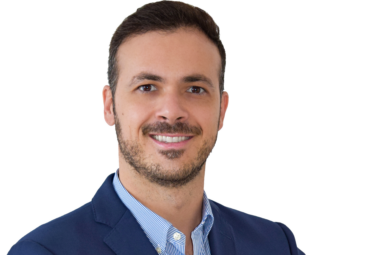
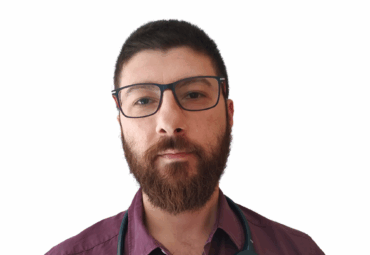
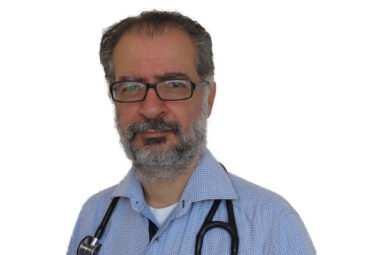
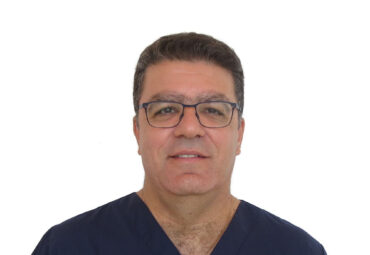
Adamantios Michalinos MD
Dr. Adamantios Michalinos is a general surgeon and Assistant Professor at the School of Medicine, European University of Cyprus. He has practiced medicine since 2019 and is a member of the Cypriot National Healthcare System (G.E.S.Y).
He graduated from the School of Medicine of the National and Kapodistrian University of Athens, Greece, with a grade of “excellent”. He was trained in large University Hospitals (Laikon University Hospital) in Greece and abroad. During his training, he became familiar with the whole spectrum of general surgery. He performs “routine” operations such as inguinal hernia repair, laparoscopic cholecystectomy, hemorrhoidectomy, thyroidectomy, and colectomy, as well as specialized operations, mainly in the field of the upper gastrointestinal system. He has also attended many scientific and post-graduation courses (ACLS, ATLS, ISDE, ICHPB) to stay current with the latest developments in his field of expertise.
He has completed a master’s in hepatobiliary surgery. He defended his Ph.D. with the grade “excellent” in 2014. He has many publications (>150) in renowned international scientific journals such as the American Journal of Surgery and the Diseases of the Esophagus, and he has spoken at many Hellenic and international congresses. He scores high values in various scientific metrics such as the number of citations (>1000) and has an h-index of 16.
He is an assistant professor of the School of Medicine at the European University of Cyprus, where he teaches students alongside distinguished colleagues from Cyprus and abroad. The European University of Cyprus is the first University in Cyprus to be ranked with 5 stars in the fields of Teaching, Facilities, Social Responsibility, and Internationalization by QS Top Universities, an international organization that ranks universities throughout the world.
Dr Adamantios Michalinos is a proponent of laparoscopic surgery, as he sincerely believes in the benefits it provides for patients, including less postoperative pain, faster mobilization, and faster return to preoperative activities. He considers the personal relationship and interest he develops with each patient his biggest advantages. He is a proponent of highly specialized and personalized medicine.
meet other specialists